


The End of Visual Luxury: Why Hospitality Design in 2026 Is Becoming More Human
True luxury in hospitality design is no longer defined by spectacle, but by atmosphere, permanence and emotional connection.

For years, luxury hospitality was defined by spectacle, features like grand entrances or perfect symmetry. Highly polished interiors designed to impress instantly and photograph beautifully. Spaces became increasingly visual, increasingly curated for screens, and increasingly disconnected from how people actually wanted to feel inside them. They were designed more for Instagram and less for humans.
But something is changing.
Across hospitality, residential interior architecture, and lifestyle design, a quieter shift is taking place. In 2026, the conversation is no longer centred around excess or visual performance. Instead, the most influential spaces are becoming slower, more atmospheric, and deeply human.
Guests are no longer searching only for beauty. They are searching for calm. For emotional connection. For environments that feel restorative rather than overwhelming. Spaces with a strong connection to nature.
In many ways, the future of luxury design is becoming less about display and more about experience.
At Aartium, this evolution reflects a growing desire for interior architecture that feels timeless, grounded, and emotionally connected to place.
From Statement Design to Emotional Design
For much of the past decade, hospitality design was shaped by visibility.
Spaces were created to stand out immediately. Interiors often prioritised dramatic visual impact, social media exposure, and trend-driven aesthetics over longevity or emotional resonance. While these environments captured attention, many lacked permanence. They felt temporary, interchangeable, and detached from their surroundings.
Today, travellers and private clients are responding differently.
There is growing fatigue around overstimulation and performative luxury. People are increasingly drawn toward environments that feel intuitive, restrained, and calming. Spaces that allow them to slow down rather than consume endlessly.
This shift is influencing how architects and designers approach hospitality entirely.
Rather than asking how a space photographs, the more important question has become: how does it make someone feel? How does one experience this environment? How does this space transport a person emotionally and psychologically?
To us, atmosphere matters more than decoration. Proportion matters more than excess. Silence, shadow, texture, and natural light are key central elements within contemporary hospitality environments. The story, heritage, culture, and vernacular are of equal importance to the design itself - in fact, they form part of the same concept.
The most memorable spaces are often the quietest ones.
The Rise of Sensory Interior Architecture
As digital life becomes faster and more fragmented, interior architecture is beginning to move in the opposite direction.
Designers are placing greater emphasis on sensory experience and emotional wellbeing. Hospitality environments are increasingly being designed around how the body responds to space, light, acoustics, materials, and movement.
This is one of the defining shifts shaping interior architecture and interiors in 2026.
Guests are becoming more sensitive to environmental quality. Harsh lighting, reflective surfaces, visual clutter, and constant stimulation are being replaced by softer and more tactile environments designed to encourage calm and presence.
Natural materials play a significant role in this transition.
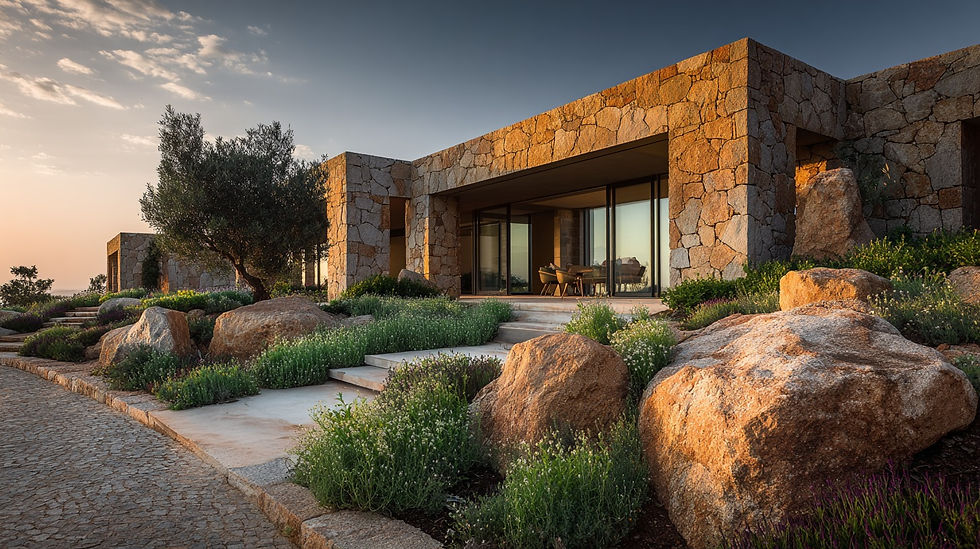
Limewash walls, textured plaster, aged timber, brushed stone, linen, travertine, and handmade finishes are no longer simply aesthetic choices. They create warmth, softness, and sensory depth within a space. These materials age naturally, absorb light differently throughout the day, and introduce a sense of permanence that synthetic finishes often lack.
There is also a growing appreciation for imperfection: that Japanese philosophy of Wabi Sabi which forms part of our design methodology.
Handcrafted materials, subtle irregularities, and visible texture create environments that feel human rather than manufactured. In luxury hospitality particularly, authenticity is becoming far more valuable than perfection.
The future of luxury is no longer cold minimalism. It is emotional comfort.
Slow Hospitality and the interior architecture of Calm
One of the most significant movements influencing hospitality design today is the rise of slow travel.
Travellers are increasingly choosing experiences centred around restoration, reflection, wellness, and connection to place. Rather than moving quickly between destinations, many are seeking environments that encourage them to pause and remain present.
interior architecture is responding directly to this shift.
Hotels, retreats, and private residences are becoming quieter and more immersive. Spatial flow is softer. Lighting is warmer. Interiors are less crowded. Outdoor and indoor environments are blending more naturally together.
Design is becoming slower.
This does not mean simplicity without intention. In fact, slower spaces often require greater precision. Every proportion, material, transition, and source of light becomes more important because the environment itself is designed to support emotional experience.
Increasingly, hospitality spaces are being shaped around rituals of calm: morning light entering softly through linen curtains, shaded courtyards cooling interior rooms naturally, textured stone underfoot, quiet transitions between inside and outside, and spaces that allow silence to exist comfortably.
These elements are subtle, yet deeply memorable.
In a world dominated by constant stimulation, calm has become one of the most valuable experiences luxury hospitality can offer.
Why Place Matters Again
Another defining characteristic of contemporary hospitality design is the return to place-driven interior architecture.
For many years, luxury hospitality became increasingly globalised. Hotels in different countries often looked and felt remarkably similar. Local identity was replaced by international trends and generic luxury formulas.
That approach is beginning to fade.
Clients and travellers are increasingly drawn toward interior architecture that feels connected to its landscape, culture, climate, and regional materials. There is growing appreciation for buildings that belong naturally within their environment rather than overpowering it.
This shift is encouraging architects and designers to work more contextually.
Buildings are responding more carefully to natural light, local craftsmanship, surrounding terrain, and cultural rhythm. Material palettes are becoming more regional and grounded. Interiors feel more authentic because they are shaped by place rather than trend forecasts.
This creates a stronger emotional relationship between people and space.
A coastal retreat should feel connected to the atmosphere of the coastline. A mountain residence should respond naturally to landscape, texture, and climate. Hospitality environments become more memorable when they reflect the identity of where they exist rather than attempting to replicate a universal aesthetic.
Timeless interior architecture has always understood this.
The Return of Timelessness
Perhaps the most important shift happening within interior architecture and hospitality today is the renewed focus on longevity.
Trend cycles are moving faster than ever, but the spaces that leave the deepest impression are rarely trend-driven. They are spaces designed with restraint, clarity, and permanence.
Timelessness is becoming the new luxury.
Clients are increasingly looking for environments that will age beautifully over time rather than feel visually outdated within a few years. This has encouraged a move away from highly stylised interiors toward more enduring architectural approaches focused on material integrity, proportion, atmosphere, and emotional balance.
Timeless spaces do not compete for attention.
They reveal themselves slowly through light, texture, rhythm, and experience. They allow occupants to feel grounded rather than visually overwhelmed. They create emotional memories not because they are loud, but because they feel deeply considered.
In many ways, the future of interior architecture may become less about creating spectacle and more about creating emotional permanence.
At Aartium, we believe the most meaningful spaces are those that respond carefully to people, place, and atmosphere. Spaces designed not simply to impress for a moment, but to remain relevant and emotionally resonant for years to come.
Because in an increasingly fast-moving world, the most enduring environments may ultimately be the ones designed to slow us down.


Comments