


What Defines True Luxury in Hospitality Design?
True luxury in hospitality design is defined by spatial clarity, material longevity and calm environments that support performance and lasting comfort.
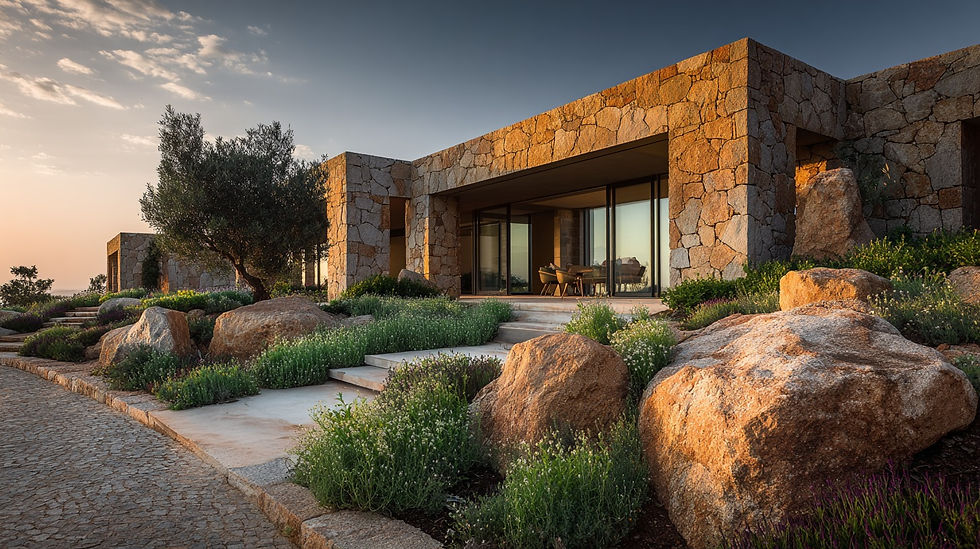
A Framework for Contemporary Hotels
Luxury in hospitality has long been associated with visual impact.
For decades, hotels communicated prestige through scale, material richness and dramatic architectural gestures. Grand lobbies, polished stone surfaces and oversized chandeliers were designed to impress from the moment of arrival.
While these elements can still feel compelling, they no longer define luxury in a meaningful way.
Today, travellers, developers and operators are increasingly recognising that the most memorable hotels are not the most extravagant. They are the ones that feel effortless, coherent and quietly resolved.
In this context, luxury is no longer a purely visual category.It is a spatial and operational outcome.
Rather than being defined by style, it can be understood through a set of underlying principles that shape how a hotel performs, evolves and is experienced over time.
The Five Pillars of True Luxury
Spatial Clarity
True luxury begins with how a space is organised.
When circulation is intuitive, proportions are well balanced and layouts feel natural, a hotel becomes immediately comfortable to inhabit. Guests may not consciously analyse these qualities, but they recognise when a space simply works.
Spatial clarity is achieved through careful planning rather than decoration. It is present in the alignment of movement, the relationship between rooms and the quiet logic of how spaces unfold.
When resolved well, it creates an experience that feels effortless from the outset.

Material Longevity
Hotels are environments of continuous use.
Unlike residential spaces, they must withstand constant occupation, movement and maintenance. For this reason, material selection carries a particular weight.
True luxury is rarely found in materials that appear pristine only at opening. Instead, it is expressed through materials that mature with time — stone that develops patina, timber that gains depth, lime plaster that softens with age.
These materials do not resist use; they absorb it.
A space that continues to feel relevant and composed years after opening reflects a deeper level of design thinking — one that prioritises longevity over immediacy.

Operational Intelligence
Behind the visible calm of a hotel lies a complex operational system.
Service corridors, storage areas, housekeeping routes and maintenance strategies are rarely seen by guests, yet they fundamentally shape how a building performs.
When these systems are not carefully integrated, friction appears quickly. Circulation becomes inefficient, maintenance becomes complex, and the experience begins to feel less resolved over time.
Thoughtful hospitality design recognises that a hotel must function as well for those who operate it as for those who inhabit it.
When operational planning is embedded early in the design process, the result is a building that feels seamless — not because it is simple, but because it is well considered.

Contextual Identity
Luxury hospitality is increasingly defined by its relationship to place.
For many years, hotel design followed a largely globalised language, often detached from local context. Today, this approach feels less relevant.
Guests are drawn to environments that reflect their surroundings — spaces shaped by climate, landscape, materiality and culture.
A hotel in Portugal should not feel interchangeable with one in New York or Singapore. Local materials, regional craftsmanship and environmental conditions offer opportunities to create architecture that feels grounded and specific.
In this sense, identity is not applied.
It is embedded.
Atmospheric Calm
Perhaps the most defining quality of contemporary luxury is calm.
In a world shaped by speed, density and constant digital engagement, hotels are increasingly experienced as places of pause. Spaces that feel balanced, quiet and restorative carry a different kind of value.
This atmosphere does not emerge from minimalism alone. It is the result of carefully composed spatial relationships — the control of light, the tactility of materials, the proportion of rooms and the connection to landscape.
When these elements are resolved with precision, a space begins to feel composed rather than designed.
Calm, in this context, is not an aesthetic.
It is an outcome of clarity.


Comments